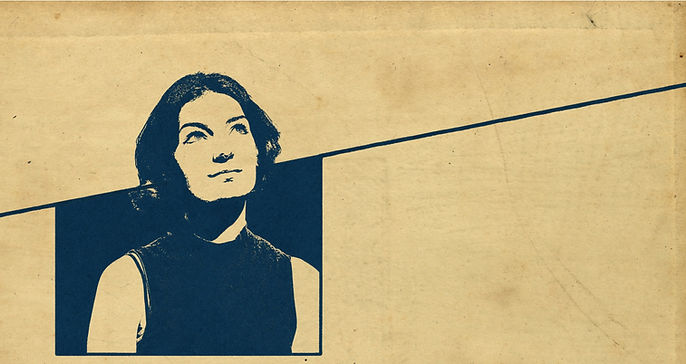
Édouard Louis and Eddy Bellegueule are the same person and they are not. To end Eddy is the story of a transformation, that of the peculiar boy who has to survive in the environment of violence, machismo, poverty, and homophobia in which he has the bad luck to be born. The sensitive and restless boy who must hide his true self to try to be accepted. The teenager who goes out of his way to look like a real man in order to avoid the fate of abuse and humiliation to which he seems condemned. But it is Édouard who, with stark and luminous honesty, tells us the story of Eddy, his suffering and his liberation when he finally manages to flee from that oppressive environment. Because the end of Eddy Bellegueule is the beginning of Édouard Louis, one of the most brilliant writers of his generation.
The disappearance of Gerardo Vera leaves us without the director of this work as planned. José Luis Arellano, Gerardo's pupil, will direct this play that we dedicate to the memory of one of the great Spanish theater directors of recent times. These are the notes that Gerardo left written:
Not since August by Tracy Letts have I been so impressed by a contemporary text.
Eddy is like a thick spit thrown violently against the well-thinking consciences of a society installed in a deep insensitivity towards the pain of others, in a despicable rejection of those who are different. This luminous text by Édouard Louis is impregnated with truth, pierced on all four sides by verbal and physical violence that gives you no respite. It is a desperate cry from an adolescent aware that for his family he is nothing more than a degraded being, a source of shame, repulsion, ignominy; a curse. Echoes of Genet and Koltès, the same violence, the same fragility and the same compassion towards the characters.
It's my first montage for LaJoven. It is exciting to meet them on stage after so many years of following their dazzling path of commitment to the youngest. Being close to David Peralto and José Luis Arellano makes me feel safe directing two very young actors, an unusual challenge in my career. I am very grateful for your trust. I am also in love with José Luis Collado who, once again, has hit the target again with a text in Spanish that gives me the same emotion that Èdouard Louis's novel did when I read it for the first time. Thanks also to the Teatro de La Abadía and Carlos Aladro, its director, for resolutely hosting such an exciting theatrical experience. _cc781905-5cde-3194-bb3b_cf58d_
Premiere
Abbey Theater
October-November 2021
Duration: 1h 30 min
Language: Spanish
Recommended from 12 years
ELENCO


EQUIPO
Autora
Mercedes Pinto
Versión
Raúl Losánez
Dirección escénica
José Luis Arellano García y Mabel del Pozo
Intérpretes
Paula Feror, Helena Lanza y Raúl Martín
Escenografía y vestuario
José Luis Raymond
La escenografía parte del diseño de escenografía de la obra Postales del Este, del escenógrafo Jan Pappelbaum
Iluminación
Óscar Fernández
Música original
Koki Lortkipanidze
Ayudantía de dirección
Álvaro Copado
Ayudantía escenografía
Christina Eleftheriadou
Ayudantía vestuario
Laura Camila Forero
Realización escenografía
Juan Carlos Rodríguez
Material didáctico
Maite Fernández, Ana Matey, Elena Trujillo, Mar Friera y Carmen del Valle
Agradecimientos
Alejandra Rojo, Fran Garcerá, Jan Pappelbaum y Schaubühne Berlin
En la escenografía se han utilizado materiales cedidos por Schaubühne Berlín del espectáctulo 'Postkarten aus dem Osten' con diseño de escenografía de Jan Pappelbaum y dirección de Stas Zhirkov
GALERÍA


UNAS SEÑORAS... CUALQUIERA
Édouard Louis and Eddy Bellegueule are the same person and they are not. To end Eddy is the story of a transformation, that of the peculiar boy who has to survive in the environment of violence, machismo, poverty, and homophobia in which he has the bad luck to be born. The sensitive and restless boy who must hide his true self to try to be accepted. The teenager who goes out of his way to look like a real man in order to avoid the fate of abuse and humiliation to which he seems condemned. But it is Édouard who, with stark and luminous honesty, tells us the story of Eddy, his suffering and his liberation when he finally manages to flee from that oppressive environment. Because the end of Eddy Bellegueule is the beginning of Édouard Louis, one of the most brilliant writers of his generation.
The disappearance of Gerardo Vera leaves us without the director of this work as planned. José Luis Arellano, Gerardo's pupil, will direct this play that we dedicate to the memory of one of the great Spanish theater directors of recent times. These are the notes that Gerardo left written:
Not since August by Tracy Letts have I been so impressed by a contemporary text.
Eddy is like a thick spit thrown violently against the well-thinking consciences of a society installed in a deep insensitivity towards the pain of others, in a despicable rejection of those who are different. This luminous text by Édouard Louis is impregnated with truth, pierced on all four sides by verbal and physical violence that gives you no respite. It is a desperate cry from an adolescent aware that for his family he is nothing more than a degraded being, a source of shame, repulsion, ignominy; a curse. Echoes of Genet and Koltès, the same violence, the same fragility and the same compassion towards the characters.
It's my first montage for LaJoven. It is exciting to meet them on stage after so many years of following their dazzling path of commitment to the youngest. Being close to David Peralto and José Luis Arellano makes me feel safe directing two very young actors, an unusual challenge in my career. I am very grateful for your trust. I am also in love with José Luis Collado who, once again, has hit the target again with a text in Spanish that gives me the same emotion that Èdouard Louis's novel did when I read it for the first time. Thanks also to the Teatro de La Abadía and Carlos Aladro, its director, for resolutely hosting such an exciting theatrical experience. _cc781905-5cde-3194-bb3b_cf58d_